
Two
classes of drugs – ACE inhibitors and ARBS (angiotensin
II receptor blockers) – have been part of national
diabetes- treatment guidelines for years because
they can prevent heart and kidney complications,
especially in older people. A new study has found
that only 43 percent of elderly with diabetes get
the medications. Author Allison Rosen suggests that
contributing factors are lack of physician awareness,
cost and few effective measures to encourage use
of the drugs. (http://www.newswise.com/articles/view/519679/?sc=dwhp
H
I T S
An HBNS story on the effects of alcohol misuse during
pregnancy was used by the St. Louis Post Dispatch,
The Australian, HealthDay News and yahoo.com A story
on increased depression risk among women with urinary
incontinence was picked up by CanWest newspapers in
Canada, The Guardian in London and the Washington
Times.
And a story linking drinking at earlier ages by youth
to their wearing of clothing with beer company logos
appeared on Foxnews.com, Reuters and the Hindustan
Times.
M
I S S E S
In
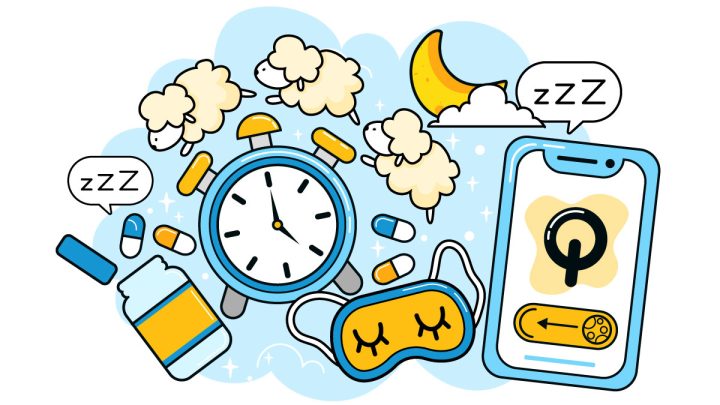
early April, most of the news media could not resist
telling about the prestigious Institute of Medicine's
report virtually declaring sleep disorders a public
health issue. It quoted NIH "estimates" that
70 million Americans have a sleep problem of some
kind. The wires and major broadcasters passed that
figure along although there is no such evidence.
It would mean one of every four Americans – man,
woman and child – are not sleeping well. A
public health problem? Not likely, but a dream statistic
for sleeping pill advertisers.
Jessie
Gruman President and Executive Director, Center for
the Advancement
of Health
The Public Library of Science, a free
online journal,devoted
a recent issue to "disease mongering" – the
practice by drug companies of turning routine, transient
conditions into scary new illnesses. They get away with it
partly by taking advantage of gullible journalists trying
to satiate a perceived public demand for health news.
Right now, the demand for medical news of any kind is
a function of the average age of newspaper and evening
broadcast news audiences. They are the market for drugs
to treat serious life-threatening diseases, for certain,
but also for a horror show of brand new diseases once
previously thought to be badges of age: erectile dysfunction,
restless leg syndrome, heartburn and insomnia, to name
a few.
Several weeks ago, the American
Journal of Managed Care issued a study showing that
most Americans get their
news from television, that health news on the air increased
dramatically in recent years and that typically the stories
were misfocused, uninformative and often rife with "egregious
errors … that could harm viewers who relied on
the information."
That's the good news! The bad news is the corruption
of science and journalism in the name of commerce.
You would have had to have been
in a coma not to have heard a news account during "National Sleep Week" in
late March that one in four Americans -- 70 million or
so -- suffer from sleep disorders, even though that includes
anyone who woke up grumpy a little too early some time
in the past six months. (According to one National Institutes
of Health estimate, as few as 28 million have chronic,
debilitating insomnia.)
The prestigious Institute of Medicine last month issued
a widely reported scientific-sounding snooze-inducing
report on sleeplessness, but it wasn't responding to
some alarming new epidemic. The report was a wake-up
call commissioned by a syndicate of sleep advocates,
including the National Sleep Foundation, an organization
embraced not only by the arms of Morpheus but by the
sleeping pill and mattress manufacturers who fund much
of it.
The next day, the news media swallowed
more than just aspirin and wrote about the next public
health disaster – the
fact that migraines in teenagers are not adequately treated.
That study was done by the National Headache Foundation,
which gets most of its support from – guess who?
-- 25 companies that think not enough people are taking
enough of their prescription drugs.
Sleep disorders and chronic headaches are legitimate
problems, but so are marketing schemes disguised as science
and reporters who couldn't find a Form 990 even after
LASIK surgery.
These are not good times for the credibility of either
the news or the medical research establishments. Perhaps
one day, an intrepid reporter may awaken and realize
that this sudden outbreak of malady, malaise and misery
was a case where the cure was first, then the disease.
FROM THE CENTER
MEDAL Center
President Jessie Gruman is this year's recipient of The George Washington University
President's Medal. She will be honored for her advocacy and activism by President
Stephen Joel Trachtenberg at the university's Phi Beta Kappa induction ceremony
May 21. Previous recipients include Vaclav Havel, Shimon Peres and Mikhail Gorbachev.
NEW
SCHOLARS Seven
postdoctoral researchers have been selected for the multidisciplinary track
of the Kellogg Health Scholars program directed by the Center. The 2006-2008
scholars, and their new academic homes, are: D. Phuong (Phoenix) Do, University
of Michigan; Sandra Echeverría, Columbia University; Angelica
P. Herrera,
University of Texas; Mindi Spencer, University of Pittsburgh; Kalahn
Taylor-Clark,
Harvard; Angela D. Thrasher, UCSF/Berkeley; Anita
M. Wells, Morgan State
University.
FEED
THE BLOG The HealthBehaviorBlog is now available as an RSS feed. Please
click on the RSS button on our home page to add it to your
newsreader and please link us to your blog. We aim to inform,
comment, provoke and inspire discussion about how to help
people use evidence to make health decisions in their own
interest.
HEALTH AND BEHAVIOR INFORMATION TRANSFER
An
important new Web
site has opened (www.healthnewsreview.org)
to review newspaper coverage of new research. It is
run by Prof. Gary Schwitzer of the University of Minnesota
as a program of the Foundation
for Informed Medical Decision Making. The reviewers
are from the journalism, medicine, health services
research and public health
fields.
Columbia
University has received a $200 million gift to create the Jerome L. Greene
Science Center, a new research and teaching facility that will serve
as the intellectual home for Columbia's expanding initiative in Mind,
Brain and Behavior. It is the largest private gift received by a university
for creation of a single facility. http://www.columbia.edu/cu/news/06/03/science_center.html
An
op-ed by the Center's Ira Allen appeared in the Baltimore
Sun April 25 on the credibility problems facing the news business
and the medical establishment by incomplete or hyped reporting of scientific
findings. http://tinyurl.com/phqug
The Society of Teachers of Family Medicine will
hold a forum on "Finding
Common Ground in an Age of Evolving Health Care" in Chicago Sept. 14-17.
For more information www.stfm.org/forum.
The Center
for the Advancement of Health identifies and disseminates
state-of-the-science evidence about the influence of behavioral,
social and economic factors on disease and well-being. Its purpose
is to support health decision-making by the public and strengthen
relationships among researchers and policymakers. The Center receives
unrestricted funding from a number of foundations, principally
The Annenberg Foundation and the John D. and Catherine T. MacArthur
Foundation.