
The Ultimate Guide to Quitting Smoking
Wondering how to quit smoking? Here’s the good news: you’re not alone in this. As a matter of fact, millions of people destroy their health on their own demand by abusing cigarettes every day. Being the third-most abused substance in the world, tobacco is plaguing the modern society. [1]
Like alcohol, cigarettes are an interesting phenomenon. If you ask people on the street, they will swear they know all the side effects of both substances. Yet, when you take a look around, it seems like nobody bats an eye to the dangers of smoking.
We’ll be happy to answer, but first, let’s make sure you know exactly why it’s good to kick that awful habit.
This is because cigarettes have long been associated with something jiggy, classy – something which ultimately became an omnipresent pop cultural symbol. And because our decisions are based on emotions rather than logic, ‘cool’ sounds definitely more appealing than ‘healthy’ or ‘conscious’.
But let’s say you’ve finally woken up from the mist and are ready to quit smoking, but the question remains: how?
We’ll be happy to answer, but first, let’s make sure you know exactly why it’s good to kick that awful habit.
Why is Smoking Disastrous For Your Health?
For many people, health aspects are the last (and the weakest) source of motivation that may not be enough to quit. Smoking is a strong addiction, and going cold turkey requires some serious willpower.
The majority of smokers are only afraid of the lung damage and the risk of cancer, which, to be honest, isn’t the only threat to a smoker’s health. Inhaling tobacco can cause a wide range of severe side effects, affecting a large part of the body’s organs and systems.
Aside from short-term effects, such as yellowing fingers, ugly breath, weaker hair, and skin, you may also develop a hacking cough and even allergy symptoms caused by mucus buildup.
Don’t feel convinced yet? Here’s what smoking can do to your health in the long run:
- 7 types of cancer
- Circulatory diseases
- Inflammation
- Digestive issues
- Respiratory problems (pneumonia, tuberculosis)
- Bone density loss
- Vision dysfunctions
- Reduced potency
- Genetic damage to sperm
- A decrease in fertility
- An earlier menopause
- Type 2 diabetes
The litany of long-term side effects is much longer, but this post is not about the exact number of diseases caused by smoking that can put you to sleep for eternity, so we decided to include only the most significant reasons for quitting.
Okay, but how to quit smoking when you’re a nihilist who has come to terms with the fact that we are all going to end a couple meters beneath the ground, anyway?
Other Reasons to Quit Smoking
You see, smoking is a very disgusting habit, but the worst part of being a chronic smoker is that you eventually become extremely egoistic because you think that your addiction affects only you.
So, maybe, just maybe, it’s time to sit for a moment and think about other people harmed with secondhand smoke. Or, if you have children, cut the addiction so that they will be half as likely to take up smoking. After all, a fish decays from its head. [2]
While this is not necessarily the most altruistic argument, you may want to put off that last cigarette once you learn that your sex life could be much more exciting due to better blood circulation. You know what they say – live UP to the expectations, right? And speaking of the time spent in the bedroom, smoking can cause snoring both for the smoker and the people around that person, so quitting will make everybody in your house sleep better.
So as not to make this a drag, here’s a quick list of other benefits from our How to Quit Smoking guide:
- You will save a lot of money that you can spend on the things you enjoy.
- Everything will taste better.
- Your sense of smell will be brought back to life.
- You will become more productive since you will no longer be a slave to a cigarette.
- Statistically speaking, non-smokers earn 11% more at their jobs.
- No need to worry about smoking bans and smoking sections any longer.
Well said, right? So far so optimistic? Let’s tone your enthusiasm down a bit for a while, then.
Why is Quitting So Difficult for Some People?
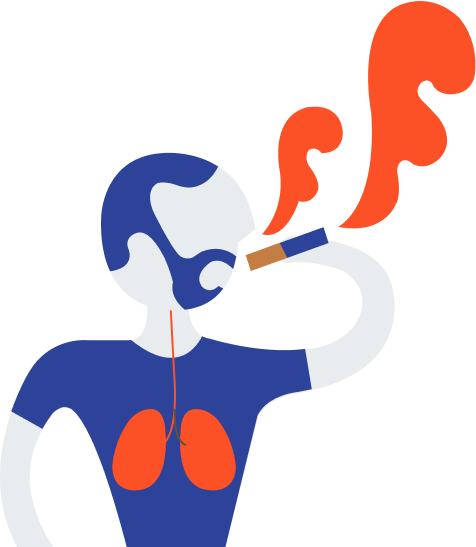
Tobacco is addictive both in a psychological and physical way, which is the most probable reason why many people simply don’t know how to quit smoking. They try, then they give up, try again, fall right on their knees, kiss the ground, try another time – and the vicious circle continues to spin.
Let’s take a look over the most common obstacles for all soon-to-be non-smokers.
Nicotine Withdrawal Symptoms
Speaking of the physical addiction, yes, nicotine can cause a number of withdrawal symptoms once you quit smoking. The reason is simple: your body gets used to the intake of nicotine over time, so when you suddenly and abruptly cut down on its supplies, it will trigger a sort of a shock reaction.
Nicotine withdrawal symptoms appear quickly, usually starting within an hour from the last cigarette, reaching their peak two to three days later. How long these symptoms will last may vary from person to person, but on the average, withdrawals last for a few days to several weeks. [3]
Common withdrawal symptoms include:
- Nervousness and anxiety
- Trouble sleeping
- Impaired attention focus
- Headaches
- Increased appetite
- Cigarette cravings
- Upset stomach
- Fatigue
As nasty as these withdrawal symptoms may be, keep in mind that they will eventually fade over time. You will get better in a few weeks, as your body gets flushed with the toxins.
Cigarette Cravings
There is a reason why we decided to highlight this particular withdrawal symptom. While it’s true that smoking is also a physical addiction, many people are affected only by the psychological habit of having something in their mouth.
Even if you try to justify your addiction with tales of sweet relaxation provided by cigarettes, these feeling is only temporary and the truth is that most of the time, you are just puffing something, which eventually becomes part of your daily routine.
In other words, you may very well get addicted to tapping yourself in the forehead every hour.
But worry not, cigarette cravings are actually quite manageable. They don’t last long – typically, about 5 or 10 minutes, so if you manage to refrain from smoking during this time, you will make a significant step closer to your victory.
Whenever you’re tempted to light up, remind yourself why you quit, how far you already are in your endeavor, and ask yourself whether it’s worth to lose it all for the sake of short-lasting pleasure?
Omnipresent Triggers
Tobacco is a very ‘social’ drug, which means it tastes better when used in the company or with drugs that make tobacco more enjoyable. Yes, we’re talking about alcohol, other smokers, and this almost unquenchable craving for an after-meal cigarette.
When it comes to alcohol and other smokers, it’s best to avoid them. Alcohol and tobacco are a deadly duo, and unfortunately, the more you drink, the more you smoke – that’s the golden rule by which all tobacco addicts will swear. As for other smokers, come on! Their very presence might be the trigger for your cigarette cravings, so for the time of your, let’s say, recovery, it could be a wise move to refresh those other, non-smoking contacts.
Before You Take Action…

Some people will tell you that planning to quit an addiction is simply delaying the inevitable and as such, their recommendation would be to cut the crap and stop smoking immediately.
While this method can work for some people who are wondering how to quit smoking, not everyone is ready to go under such dramatic changes just like that.
So, before you take action, be sure to make a:
S.T.A.R.T – Your Personal Stop-Smoking Plan
If you’re a lifetime pack-a-day smoker, you will need a simple framework that will help you kick the foul habit once and for all – it’s called S.T.A.R.T.
- S – Set a quit date.
- T – Tell family and friends that you’re going to quit smoking.
- A – Anticipate any challenges that you may face when quitting.
- R – Remove cigarettes, tobacco derivatives, and other triggers.
- T – Talk to a professional about receiving help to quit.
Choosing a quit date is an essential milestone in your endeavor. Choose a date within the next two weeks so that you have some time to prepare for it without losing your motivation.
Informing your family and friends about your plans to quit smoking may gain you their support – you might even find a quitting buddy so you could help each other get through the tough times.
Most people don’t anticipate the potential challenges they will face while quitting, which is why they begin smoking again within the first three months.
Staying prepared will save your nerves and thus make the whole process much easier.
The removal of cigarettes and other triggers is one of the most important aspects of quitting because they won’t keep your mind busy any longer. Of course, cigarette cravings will still occur, but they won’t be as intense as if a whole pack of cigarettes lying in front of you.
Last but not least, if you think that you simply won’t make it through, consult your concerns with a doctor. Popping pills to numb your nicotine withdrawals might not be the best option, but a visit to a therapist who specializes in treating addictions may prove invaluable.
8 Ways to Kick the Smoking Habit Without Losing Your Mind
Sometimes, the dog’s bark is more dangerous than its bite, and knowing how to help yourself out when quitting smoking will give you the upper hand over cigarettes in this clash. Here’s how to quit smoking without going mental.
1. Go Cold Turkey
The simplest solutions are often the most effective ones. While you may find it hard to believe, the vast majority of people who have successfully quit smoking have done so by going cold turkey – nothing beyond that.
And then, of course, they stayed true to their resolutions.
There’s no quitting gradually, no smart systems or techniques – if someone is trying to convince you that they have a universal pattern for quitting cigarettes, and they don’t mean going cold turkey, they are up to no good, you can trust us on that.
If you can’t make a simple decision and give up cigarettes, you can’t expect yourself to succeed.
2. Keep Yourself Busy
The best way to free your mind of thinking about lighting up is to keep yourself occupied all the time. Whenever you feel the urge to smoke a cigarette, go and do something that you particularly enjoy. You may read a book or magazine, listen to your favorite tunes, cook a dinner, solve puzzles, play online games, or hit the gym.
3. Stay Away from Smoking Triggers
We’ve already said that, but smoking triggers such as alcohol or other smokers can ruin your whole quitting effort. Maybe you will get less sociable, maybe you won’t party like an animal anymore, but isn’t a long and healthy life totally worth it?
4. Switch to Vaping
Here’s a compromise for those of you who can’t say ‘No’ to nicotine or they just like to inhale the stuff. If that’s your story, consider switching to vaping. Vaporization will only heat your material to the temperature at which the device – a vape pen or a vaporizer – can draw its active compounds and deliver them right to your bloodstream.
There are two options if you plan on making your inhalation habits healthier:
Vaping with E-cigarettes (e-liquids)
E-cigarettes come in the form of e-liquids, which are basically nicotine combined with Vegetable Glycerin (VG) or Propylene Glycol (PG) to create nice clouds of vapor upon exhaling. Aside from the e-liquid, you will need an e-cig device to load the e-liquid cartridges with. The greatest advantage of switching to e-cigarettes is that they do not utilize combustion. The bad thing, though, is that you still deliver nicotine to your system. [4]
Vaping with CBD Oil
CBD, also known as cannabidiol, is one of over 100 cannabinoids found in the cannabis plant. The non-intoxicating cousin of THC is known to provide users with a myriad of health benefits that have been well documented by numerous scientific studies. Interestingly, CBD products have also been found to help people go through their drug withdrawal symptoms. CBD comes in many forms, but vaping has recently become the new black in the cannabis community. Everyone is vaping cannabidiol, from A-list celebrities to regular recreational and medical users. Looking for a way to replace a bad habit with a good one? Maybe it’s time to hop on the CBD bandwagon.
5. Reduce the Stress
Remember when we told you about the all-famous excuse of literally every tobacco smoker out there? Stress! Oh, sweet Jesus, that god-damn stress! If you’re smoking cigarettes for the sake of not falling apart due to stress, the best way to go cold turkey and never get back to smoking again would be to reduce stress in your environment. Or, if this is not an option, change the environment. Studies have shown that people and their surroundings can engage in the so-called intense stress transaction, which makes them unable to function properly until they move somewhere else.
6. Manage Your Cigarette Cravings
Managing your cigarette cravings is the art of patience, so if you’re not used to delaying gratification, you might need a few life hacks to make these short periods less daunting.
Here are some ideas to soothe your mind when the urge to light up kicks in:
- Keep yourself occupied. Do the laundry, take a shower, call a friend, or turn on the TV. The activity is not that important itself as long as it gets your mind off cigarettes.
Focus on your motivation. Once again, calculate the benefits and compare them with the potential downsides (as if there were any downsides to quitting smoking). Improved appearance, more money saved on your account, and enhanced self-esteem – they are all worth skipping that “one last cig”. - Don’t enter tempting situations. Your cigarette cravings can be dependant on what you’re doing or where you are, so whenever you find yourself in a risky situation, change the environment so that you’re not tempted by any triggers.
- Reward yourself. Given the withdrawals from smoking and all the tension that can accompany you during the cleansing period, you can’t push yourself too far. That being said, be nice to yourself – your victories need to be reinforced. Whenever you win the inner battle with your cravings, give yourself a reward to stay motivated.
Dealing With Cigarette Cravings Here and Now:
Assuming the worst can always happen, let’s say you’ve found yourself in a hopeless situation, where the craving becomes unbearable. If that’s your scenario, try the following:
- Chew a gum, mint candies, or try seeds/some other kind of a healthy snack.
- Keep your hands busy by rolling a pencil, squeezing balls, or using any other kind of stimulation.
- Remain well hydrated to minimize the symptoms of nicotine withdrawals
- Get active; go for a walk, run, or try some yoga to keep yourself chilled.
- Brush your teeth to forget about the taste of cigarettes and remind yourself how blissful it is to have a clean mouth.
7. Try Medications or Therapies to Make Quitting Easier
There are many different methods that have proved successful for many people when it comes to kicking the habit. While it is possible that you succeed with the first attempt, it’s more likely that you will have to try a range of different coping methods or a combination of treatments to find the one that fits you best.
Medications
There are smoking cessation medications that can mitigate withdrawal symptoms and reduce cigarette cravings. However, more often than not, these medications are part of a comprehensive quit-smoking program monitored by your doctor.
Talk to your physician about possible options for quitting cigarettes. Thus far, the U.S. Food and Drug Administration (FDA) has approved the following:
- Nicotine replacement treatment. Nicotine replacement means that you will have to replace cigarettes with other products that contain nicotine. Such substitutes include nicotine gums, lozenges, patches, inhalers, or nasal sprays. This method helps you break your psychological addiction while gradually decreasing the amount of nicotine released to your body.
- Nicotine-free medications. These drugs can help you stop smoking by reducing both cravings and withdrawal symptoms without delivering nicotine to your system. The list of common nicotine-free medications include bupropion (Zyban) and varenicline (Chantix, Champix)
Alternative Therapies
If pharmaceutical medications are not your pair of shoes, you can try other forms of therapy that do not involve vaping or prescription drugs.
Below, you will find several examples of popular alternative therapies:
- Behavioral Therapy – like we said, nicotine addiction is often linked to the habitual behaviors of rituals involved in smoking. Behavioral therapies focus on developing a set of skills that will help you break those habits.
- Acupuncture – being one of the oldest therapeutic techniques, acupuncture is favored for its ability to trigger the release of endorphins. Endorphins allow the body to relax, which can make smoking cessation easier.
- Motivational Therapies – self-help guides and websites can help you big time when it comes to staying motivated during the cessation period. Most often, the authors of motivational books bring up the example we’ve already talked about – the financial aspect. Some people have been able to give up smoking simply because they were able to see the palpable value that came along with the end of their addiction.
- Hypnosis – forget about what you’ve seen on TV. Real hypnosis works by getting you into a deeply relaxed state where you become more open to suggestions that bolster your will to stop smoking and increase your negative attitude toward tobacco.
8. Don’t Beat Yourself For Slipping or Relapsing
Before you kick the habit for good, it’s possible that it will take you a couple attempts to succeed, so don’t panic if you slip up and smoke a cigarette. If you relapse to smoking, turn it into a rebound by learning from your mistakes. Take a while and think about the reasons or events right before you started smoking again. Then, anticipate what might happen when you try to quit for another time – this will prove invaluable should the urge to light up come back with doubled efforts.
Nonetheless, remember that a slip is not the same as relapse. In other words, it doesn’t mean that you can’t get back on the wagon if you start smoking again.
Always remind yourself about one of the following:
- A slip doesn’t make you a failure.
- Don’t let one slip drag you down the rabbit hole.
- Learn from your experience.
- Call a professional if quitting gets too difficult.
- Find and eliminate the last trigger that brought you back to smoking.
How to Help Your Loved Ones Stop Smoking?
It’s important to note that you cannot force a friend or loved one quit cigarettes; the decision has to be made by them. But once they decide to go cold turkey, you can support and encourage them to stay on the right track so that they feel less stressed about quitting.
Discuss potential treatment options with the smoker; ask your friends if they had already tried any quitting methods before they turned to you. But above all, don’t preach or judge – people don’t like being judged, especially if they are aware that they are doing something wrong. It’s like restating the obvious for the 10th time, and it will bring nothing but a useless quarrel.
If a loved one slips or relapses, make sure you do everything to keep them uplifted. The worst thing you can do to a smoker makes them feel guilty because it will induce a whole litany of negative emotions. So instead of sticking the needle into their conscience, congratulate them on the time they spent without cigarettes and make them feel appreciated for their effort.
Smoking Teens – How to Persuade Them to Quit?
The majority of smokers try their first cigarette around the age of 11. These statistics can be worrying for parents, but once you see your child smoking, treat it as a unique challenge that peers pressure teen face when it comes to giving up on smoking. [5]
While the decision of leaving cigarettes has to come from the teen smoker, there are several ways for you to show support, namely:
- Threats and ultimatums don’t work. Instead of throwing tantrum everywhere, find out why your child is smoking. They may do it in order to be accepted by a peer group or they simply seek your attention. If that’s the case, you have no other option than to go through some serious talk.
- Be patient and supportive as your teen goes cold turkey.
- Be a role model for your kids by not smoking yourself.
- Teach them how to be assertive and refuse a cigarette.
- Explain the risks associated with health, as well as the social impact of being an addicted smoker.
How to Quit Smoking: The Bottom Line
If smoking was so easy to give up, the problem of tobacco abuse would not be so prevalent among the global population. Despite many campaigns run by anti-tobacco and pro-health activists, cigarettes remain a strong pop cultural symbol, which, combined with strong potential for abuse, makes them a plague modern society.
But is quitting smoking truly an insurmountable feat, or have we just become so weak over time, with no willpower to challenge and successfully overcome the addiction? As it is with all things in life – it depends.
You can’t just “try to quit smoking”, as some people like to excuse themselves. To come out victorious of this clash, you have to go cold turkey without taking half-measures. All you need is a certain reason for quitting, a well-thought plan, and much support from your family and friends.
Remember that smoking is not merely a physical addiction. For some people, it can be a psychological habit, comparable to scratching your eyebrow every 15 minutes. Use the above tips to help yourself survive the tough times, and once you’re done, embrace your new life.
References
- Centers for Disease Control and Prevention. Current Cigarette Smoking Among Adults—United States, 2016. Morbidity and Mortality Weekly Report 2018;67(2):53-9 [accessed 2018 Feb 22].
- Banderali G., Martelli A., Landi M., Moretti F., Betti F., Radaelli G., Lassandro C, and Verduci E. Short and Long Term Health Effects of Parental Tobacco Smoking During Pregnancy and Lactation: a Descriptive Review. J Transl Med. 2015; 13: 327. Published online 2015 Oct 15. doi: 10.1186/s12967-015-0690-y.
- Mishra A., Chaturvedi P., Datta S., Sinukumar S., Joshi P., Garg A. Harmful Effects of Nicotine. Indian J Med Paediatr Oncol., 2015 Jan-Mar; 36(1): 24–31.doi: 10.4103/0971-5851.15177.
- Ross J. E-cigarettes: Good News, Bad News. 2016 Jul 25; Harvard Health Publishing: Harvard Medical School. Published Online 2016 Jul 25.
- Snow P.C., Bruce D.D. Cigarette Smoking in Teenage Girls: Exploring the Role of Peer Reputations, Self-concept and Coping. Health Education Research, Volume 18, Issue 4, 2003 Aug., Pages 439-452.
